Genre
Genres came from the 'Golden Age of Hollywood', wherein there were five major studios: Warner Bros, Paramount, Columbia, MGM and Universal. These studios controlled everything and wanted to cement their reputation and become more popular by producing films that followed the same conventions repeatedly. During the Golden Age Of Hollywood, which lasted from 1917 to 1960, Hollywood was a commercial enterprise. There were several people working for the studios who had moved from European countries, bringing stories of traditional fairytales with them. These fairytales then inspired the studios as film plots.The most popular genres in Hollywood at the time were Westerns, slapstick comedy, monster horror, gangster and science fiction (particularly in the 30s and 40s).
Audiences like genre films as they are predictable, meaning they know what to expect when they go into the cinema. People know they like certain genres, so they can rely on enjoying them, therefore repeatedly going to see the same genres.
 |
| The 'Golden Age Of Hollywood' |
Film Noir
'Film Noir' is a term that was originally coined by French film critic Nino Frank in 1946, literally translating to 'Black Film'. Typically, Film Noirs feature a male detective and a femme fatale and are set in a city. However, there is no rigid rule so Film Noir may be best described as a feeling through visual styling of low key lighting and story conventions.Film Noir was developed in the 1930's, building on the advancements made in film in the 20's, like synchronised sound, panchromatic film and better lighting. This decade was also the start of Technicolor films, which became A-List films. Studios sold these films in Block Booking with many B-List films, that were not in colour, to the movie theatres. This meant that the more black and white, less expensive films, the more money the studio made. Due to the relative assurance of profit, the producers could afford to be more experimental with these films, being inspired by German Expressionism. After the war, these film makers moving from Europe (particularly Germany) to Hollywood, brought with them multiple technological advancements that they had acquired while filming war documentaries. These included better light sensitive film, compact lighting and experience in shooting on location. The war also led to a sense of Nihilism in the plot and characters.
At the time that Film Noir was being developed, the creators were bound by the Hays Code, which did not allow taboo subjects and meant the films had to be more suggestive instead of explicit.
Common conventions of Film Noir:
- low key lighting
- contrast
- femme fatale
- male detective
- crime
- narration/voice-over
- flashbacks
- night time setting
 |
| 'The Big Combo' |
 |
| 'Stranger On The Third Floor' |
 |
| 'Double Indemnity' |
 |
| 'Se7en' |
Romantic Comedy
Romantic Comedy - also known as 'rom-com' - is a genre of film that portrays a love story but also has an amusing, comedic plot. Romantic Comedies are a popular genre, some well-known examples are:
- 'When Harry Met Sally' (1999)
- 'Pretty Woman' (1990)
- 'Notting Hill' (1999)
- '(500) Days Of Summer' (2009)
- 'Love, Rosie' (2014)
From the typical rom-com genre, there is the sub-genre of 'teen' rom-coms. These are specifically aimed towards teenagers/young people and are often set in a school. Two of the most popular of these films are 'Clueless' (1995) and 'Easy A' (2010).


Romantic Comedy is a successful genre in British films, the most prevalent of the studios that create them is Working Title Films, who created films such as 'Bridget Jones' Diary' and 'About Time'.
Conventions of a Romantic Comedy
- The protagonist in a romantic pursuit (stereotypically a young, attractive female)
- Focus on events leading up to the romance - the typical 'boy meets girl' scenario
- Often starts with a voice over explaining the characters/situation
- A happy ending, which means the narrative tends to be predictable
Stereotypical Representation in the 'Horror' and 'Thriller' Genres
A stereotype is a widely held but fixed and over-simplified image of a particular type of person or thing. An archetype is a very typical example of a certain person or thing.
One of the most recognisable figures in Horror films is Dracula, first adapted for Hollywood, from the novel by Bram Stoker, by Bela Lugosi in 1931. Dracula is so recognisable as the character rarely strays from the original image of a middle aged white male with an Eastern European accent, speaking broken English. The character of Dracula also connotes his upper class status, as suggested by the title 'Count'.
Another character that is iconic in the Horror genre is Frankenstein's monster, originally in the novel written by Mary Shelley.
In Horror films, the stereotypical antagonist is a white middle aged male. This is a dominant representation. For example, Dr Hannibal Lecter from 'Silence Of The Lambs'; Mike Myers in 'Halloween'; Norman Bates from 'Psycho'.
On the other end of the spectrum, the archetypal victim of Horror films is a single, white, virginal female. However, these roles have now evolved from victim to aggressor. Such as Sarah Connor from 'Terminator'; Alice in 'Resident Evil'; Ellen Ripley in 'Alien'.
Cultural Bias
Hollywood has always been 'white centric' - i.e. leading actors and directors have always been white males with minority actors only playing minor roles. However, actors like Morgan Freeman and Will Smith have broken the mould, for example Morgan Freeman's prominent detective lead role in 'Se7en'.
Heterosexual Bias
Having a homosexual protagonist is extremely rare in Hollywood. Moreover, in the Hannibal Lecter books, Thomas Harris writes nearly all the antagonists, such as serial killers, as having homosexual tendencies and sexual deviancies; this then translates into the films.
Gender Bias
Typically, females predominantly played the victim or the femme fatale. Although, since Clarice Starling in 'Silence Of The Lambs', the representations have been far more challenging.
One of the most recognisable figures in Horror films is Dracula, first adapted for Hollywood, from the novel by Bram Stoker, by Bela Lugosi in 1931. Dracula is so recognisable as the character rarely strays from the original image of a middle aged white male with an Eastern European accent, speaking broken English. The character of Dracula also connotes his upper class status, as suggested by the title 'Count'.
Another character that is iconic in the Horror genre is Frankenstein's monster, originally in the novel written by Mary Shelley.
In Horror films, the stereotypical antagonist is a white middle aged male. This is a dominant representation. For example, Dr Hannibal Lecter from 'Silence Of The Lambs'; Mike Myers in 'Halloween'; Norman Bates from 'Psycho'.
 |
| Norman Bates: 'Psycho' |
 |
| Dr Hannibal Lecter: 'Silence Of The Lambs' |
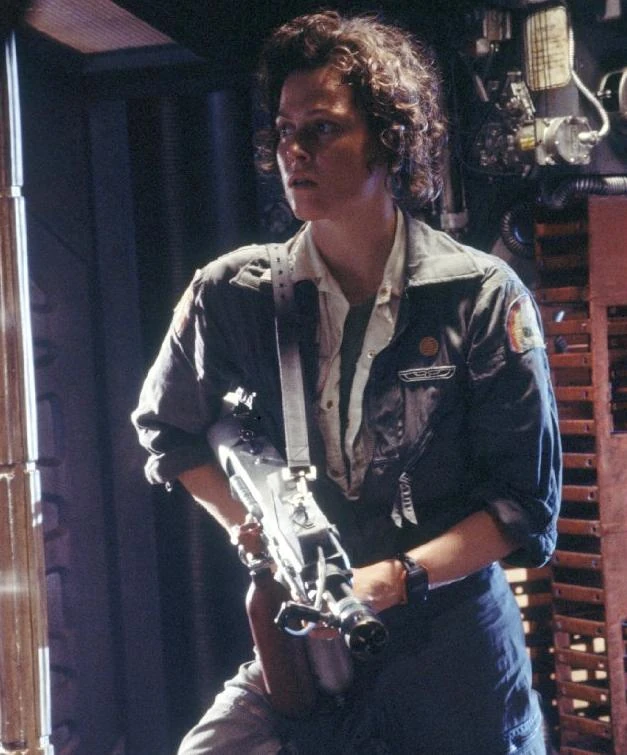 |
| Ellen Ripley: 'Alien' |
 |
| Sarah Connor: 'Terminator' |
Cultural Bias
Hollywood has always been 'white centric' - i.e. leading actors and directors have always been white males with minority actors only playing minor roles. However, actors like Morgan Freeman and Will Smith have broken the mould, for example Morgan Freeman's prominent detective lead role in 'Se7en'.
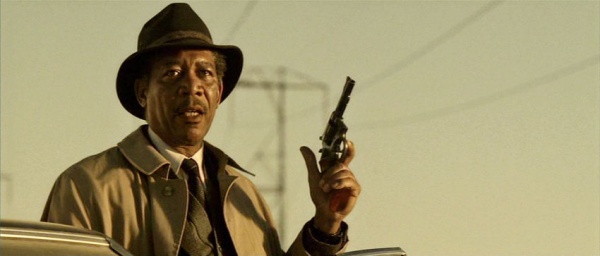 |
| Morgan Freeman in 'Se7en' |
Heterosexual Bias
Having a homosexual protagonist is extremely rare in Hollywood. Moreover, in the Hannibal Lecter books, Thomas Harris writes nearly all the antagonists, such as serial killers, as having homosexual tendencies and sexual deviancies; this then translates into the films.
Gender Bias
Typically, females predominantly played the victim or the femme fatale. Although, since Clarice Starling in 'Silence Of The Lambs', the representations have been far more challenging.
 |
| Clarice Starling: 'Silence Of The Lambs' |

No comments:
Post a Comment