Session One Scenes being filmed: Jenny entering the school, meeting Mr Adams, meeting Scott. Cast required: Zoe (Jennifer), Nigel (Scott), Mr Judge (Mr Adams) and multiple extras. Props required: multiple books, locker key, Zoe's costume (plaid shirt, shoes, jeans) Setting: school
Session Two Scenes being filmed: Jenny meeting Rosie and Tyrone. Re-film any scenes from previous session if necessary. Cast required: Zoe (Jennifer), Ella (Rosie), Myles (Tyrone). Props required: multiple books, locker key, Zoe's costume (plaid shirt, shoes, jeans) Setting: school
Session Three Scenes being filmed: Testing shots in the castle grounds - Jennifer and Scott's date. Cast required: Zoe (Jennifer), Nigel (Scott) Props required: N/A Setting: castle grounds Session Four Scenes being filmed: Jenny and Scott's date, the kiss that features in flashback Cast required: Zoe (Jennifer), Nigel (Scott) Props required: Zoe's costume (casual, date outfit), Nigel's costume (casual, date outfit) Setting: castle grounds, Strykers bowling alley Session Five Scenes being filmed: re-filming any scenes within the school that were not adequate previously Cast required: Zoe (Jennifer), Nigel (Scott), Mr Judge (Mr Adams), extras Props required: multiple books, locker key, Zoe's costume Setting: school
Jennifer Williams is a seventeen year old new starter at Landau High, her parents tend to travel a lot, although the character is used to meeting new people she is very shy and nervous around people. Jennifer has the nickname Jenny and prefers to be called this as she doesn't like the formality of her name. Jenny is a rebellious character she listens to indie rock and likes the latest fashion trends. We cast Zoe as Jennifer because she felt that she related to the character being shy, as well as being seventeen years old and sharing similar interests with the character.
Scott Turner (Nigel Barnes)
Scott Turner is seventeen years old. He is a very popular character, he is the exact opposite of Jennifer. Scott's style is 'preppy' and smart and likes to listen to chart music. He is a stereotypical boy, he is sporty, likes to mess around and socialise. Scott is a very charismatic person and knows this, Scott is known as a "ladies man". For the role of Scott we chose Nigel because he and Zoe have a good chemistry, which is essential for the romantic aspect of the film. Nigel is also a confident and charismatic character, as well as being fashionable, which makes him a good choice for the character.
Mr Adams (Mr Judge)
Mr Adams is the head of Landau High, he is very socially awkward and tends to get any conversation that he absolutely has to have over as quickly as he can. He is very rushed and doesn't really care about the condition of the high school. We have chosen Mr Judge for this role as he is an adult, which widens the representation of age in our film. Mr Judge also fits the role because he is smartly dressed and is able to be serious enough to play the head of the school.
Rosie (Ella Scharaschkin)
Rosie is very loud and nosy; she often gets in peoples business and has to know everything. she is very good at sneaking around and scares Jennifer by imposing herself on her when she first starts but then becomes her best friend. I played the role of Rosie as I felt comfortable making conversation with Zoe's character and could fit in as a typical high school student. Moreover, my voice is assertive and easy to understand which made me a good choice for Rosie's character. Tyrone (Myles Richardson) Tyrone is a stereotypical camp teenager, he is very feminine character and is very loud. He wears a lot of jewellery and is very wealthy, which he likes to present to people. When first meeting Jennifer he is very loud and provocative toward but watches her back through out her first weeks. We decided to cast Myles as Tyrone because he is comfortable with embracing his feminine side, as well as being loud and talkative. He was successful when getting into character; he improvised with his lines and chose to use a handbag as a prop to make his role more convincing. ExtrasThe extras are just school pupils, they will be wearing smart uniform and will be shocked at the new pupil (Jennifer) when she comes into her new school in casual clothing.
As shown in the opening credits, there are several key roles in the making of a film. These include:
Role Of A Screenwriter
All films start with an idea, which the writer has and writes a script based on. Sometimes, the film will be based on an existing book/comic/true story, in which case it is the screenwriter's job to adapt it to film. Writing a screenplay involves dialogue, directions and character development. Screenwriters can also do 'script doctoring', which means to edit a script in order to better suit the requirements of the directors or studio.
Responsibility Of A Composer
The composer scores music to accompany a film. This means they compose pieces of music to be played as an underscore in the film. The composer meets with the director and others to decide what score would work best, then composes this and gives this to the musicians to perform. Composers can also be involved in the production of other audio from the film, such as sound effects, which can be reproduced in a recording studio to give a better effect than on set.
Role Of A Camera-Person
The camera person of a film is in charge of operating the camera(s). The leading camera person is often called the cinematographer and they collaborate with directors, producers, cast and other crew to visually display the director's image of the film. Camera operators have to be skilled in framing shots and using equipment such as lenses and camera cranes.
Role Of The Head Of Casting
The head of casting of a film is in charge of finding and choosing the actors to portray all of the characters in the film. This involves arranging and conducting auditions, casting the actors and finding extras. As with the writer, composer and camera crew, the head of casting must work closely with the directors and producers to understand their requirements for each role.
Responsibility Of A Producer
Producers have a variety of roles, which often change depending on the film's circumstances and budget. They generally manage the production of the film, such as by selecting scripts, organising finances and supervising the cast and crew. The producer has the final word on which scenes will be cut, as well as the film director. Often they are in charge of the selling and distribution rights of the film. Producers are involved in all the stages: development, pre-production, production and post-production.
Role Of The Director
The director is in charge of the artistic and dramatic aspects of the film, portraying their individual style. They are involved in casting, production design and other creative aspects of film making. Directors must be both organised - as they arrange several technical areas of production - and artistic - they require a talent for cinematography and creativity - in order to direct the film to portray their vision. Arguably, the director is the highest ranking position in the making of the film, other than the studio, and spends more time working on the film than anybody else.
Role Allocation In Our Film
Screenwriter: me as I also study English, so writing feels the most natural to me. Producer: Zoe because she can take on a variety of roles to control the production of the film. Director: me because I'm most familiar with the Rom-Com genre so feel I can portray the style and I'm very organised. Camera Person: Liam as he is the most familiar with the equipment, such as the tripod Editor: Liam since he enjoys editing and has more experience with it.
In order to expand our knowledge of screenplays and understand how to write them for our own film, we read and analysed the start of the screenplay of ‘American Beauty’, which won the Academy Award for Best Screenplay, among other categories, in 2000.
By studying the ‘American Beauty’ screenplay, I have learned about the structure of a typical screenplay. For example, the setting is written as either INT or EXT to show whether the scene is taking place in the interior or exterior. Then there is the name of the place (e.g. BURNHAM HOUSE – JANE’S BEDROOM), followed by the time of the scene. Also, the screenplay includes short character descriptions and directions such as body language and tone, as well props and other mise-en-scene.
This understanding of screenplays will help me to write our own, which will support and structure the film.
Our Screenplay
By writing a screenplay, it means we can plan the settings, characters and dialogue. However, we only used our screenplay as a rough guide and the actors improvised their lines to give a more realistic feeling. Open with two shot of Scott kissing Jennifer, diegetic sound is muted.
INT. SCHOOL – ENTRANCE - MORNING
'Glamorous Indie Rock and Roll' by The Killers plays as background music.Over the shoulder shot of Jennifer walking into school building, doors open in front of her. Jennifer approaches reception desk.
JENNIFER (V.O.) This is how is starts; on the first day at my new school. I've done it so many times before, so you'd think I wouldn't be nervous. But I am.
Mr Adams walks up to Jennifer and dumps a pile of books and a locker key in her arms.
MR ADAMS Welcome to Landau. Your locker number is 187A. Here’s everything you’ll need. Have fun!
Mr Adams exits abruptly, leaving a confused Jennifer standing in the entrance of the school.
JENNIFER (to herself, sarcastically) Great.
Jennifer looks around and the other pupils, all dressed in preppy uniform, stare at her.
Jennifer walks through the school, unaware of her surroundings. Scott walks in from the opposite direction and they bump into each other, making her drop her books on the floor.
JENNIFER (awkwardly)Oh urm aha
Scott bends down and picks up Jennifer's things, handing them back to her.
SCOTT You're new, right? I'm Scott.
JENNIFER Yeah, I'm Jennifer, but my friends call me Jenny.
SCOTT I'll see you around then, Jenny.
He walks away, remaining cool and relaxed. Jennifer watches him leave, blushing.
INT. SCHOOL – BY LOCKERS – MOMENTS LATER
Jennifer finds her locker after some confusion. She opens it and puts some of her books in, then closes it to see a girl (Rosie) leaning against the lockers.
ROSIE (loudly) Oh my God, are you the new girl?!
JENNIFER (nervous) Yes...
ROSIE What's your name?
JENNIFER Jennifer, but my friends call me Jenny
ROSIE Nice to meet you, Jenny. I'm Rosie, and this is Tyrone.
Rosie gestures to a male pupil who walks into the frame. He is carrying a handbag and acting very feminine.
TYRONE Hey girl! I like your shoes! Where are they from - JD? Nike? Adidas? I get all mine shipped from online!
INT. SCHOOL – IN STAIRWELL – A FEW DAYS LATER
Jennifer and Rosie are walking down the stairs, while Scott walks up. Jennifer and Scott meet in the middle.
JENNIFER Oh, hi. SCOTT Hey. how are you doing? JENNIFER I'm good, thanks.
SCOTT So, I was wondering, what are you doing this weekend?
Title: My Perfect Date Synopsis: Jennifer Williams, a seventeen year old girl, starts at a new school where she finds that she doesn't fit in with the rest of the pupils. But she catches the attention of the popular and charismatic Scott Turner. Alongside her two newly acquired best friends, Jennifer attempts to figure out how to find her place at her new school and with Scott. Her end goal is to finally get her perfect date.
Setting: stereotypical high school, Strikers bowling alley and Castle grounds.
Characters: Teenager female and Teenage male. Teachers, pupils.
Character names:
Female Protagonist: Jennifer Williams
Male Love Interest: Scott Turner
Teacher 1: Mr Adams
Pupil 1: Rosie
Pupil 2: Tyrone
Extras: school pupils We decided to create a mood board to visualise the aesthetic of the film, which will be useful for planning the cinematography and mise-en-scene.
Analysis of BFI Data 2014: Genre and Classification
As shown in the table, the Horror genre was the highest
grossing out of the three genres, at £57.5million. Thriller grossed at
£29.1million at the box office. However, there were only 34 Horror films released,
compared to 64 Thrillers. This shows that in terms of profitability the horror
genre actually earns more money. Romance is the lowest profiting genre of the
three, as there were 34 released that only made a total of £13.9million.
These statistics are reflected in the table of average
number of sites at widest point of release. The Horror has an average WPR of
145, whereas Thriller is only a WPR of 89 and Romance has a WPR of 59.
However, there is a difference in these rankings on the
table showing revenues per site by genre. As with the previous two tables,
Horror is the highest with an average box office per site of 10,708. Romance is
next; this genre has a revenue of 6,895 per site. Thriller is lower, with
only 5,127 per site. This data gives a good indication of performance in the
market while controlling for the size of release. Moreover it shows, similarly
to table 1, that while there are more Thriller films released, they fail to
make a mark with the audiences.
The data about UK films is slightly different to the US
inclusive data in the first table. As usual, Horror is the highest with a gross
box office of £5million. Romance is above Thriller, with £6.2million versus
£4.1million.
In conclusion, this data shows that in 2014 there were the more Thriller films released than Horror or Romance, but Horror tended to be the most successful genre.
Target Audience of Rom-Coms
Who is your film aimed at? Why? Our film will be targeted towards teenagers, particularly girls, because that is the typical audience of romantic comedy films. We decided that we wanted our film to be individual and challenging; others in our class made thriller or horror films that tend to be targeted at an older audience. However, our group found the genre of Rom-Com more relatable to ourselves at it is our demographic who tend to watch these films. Therefore we know what we want to see in a film, as well as the actors being able to relate to their characters more. How are you going to do this? Our protagonist is a teenage girl, who has an interest in music and wears the latest fashion. This character appeals to the target audience, as well as the love interest. He is charismatic, well-dressed and confident, which tends to be desirable for teenage girls. The setting of the high school is also recognisable to our target audience. Some films with a similar target audience to ours are 'Mean Girls', 'Easy A', 'Love, Rosie' and 'Clueless' so we will aim to follow their codes and conventions.
Every film includes a sequence of titles, which lists the most important cast and crew. This can either be incorporated into the film or as separate screens. The majority of title sequences follow the same structure, which is as follows:
Studio Logo
Studio/Producer Presents
Starring main actor & major actor
Title of Film
Cameraperson
Editor
Composer/Music by
Screenwriter
Producer
Director
Although some films feature more roles, these are the most significant which will always be included in the opening credits. Embedded is an example of opening titles, from the James Bond film 'Skyfall'.
Using these titles as a template, we created our own:
Studio Logos
Every film features the studio logo at the start. These are some examples of major studios' logos:
Warner Bros. Pictures Studio Logo
Universal Studio Logo
Paramount Studio Logo
Therefore, we had to make our own logo to insert at the start of our opening sequence. In order to do this, I made several examples so that we could decide as a group which we thought would suit our film best. This included experimenting with fonts, which we wanted to reflect the romantic-comedy genre of our film.
Textual Analysis of an Opening Sequence: 'Blue Velvet'
In
the opening couple of minutes of Blue Velvet, David Lynch creates an image of a
utopian suburban America. This can be seen in the first shot, which shows a
white picket fence with red roses against a blue sky. This portrays a
picturesque setting and the colours of red, white and blue connote the American
flag. Alongside the relaxing music, it makes the viewer feel temporarily at
ease with the ‘perfect’ scene.
There
is then a fading transition, to give a slow pace and coherent feel, between the
next shots, which again represent the ideal suburban America in the fifties.
For example, the old fashioned fire engine with the waving fireman and the dog
give the feeling of safety and security. Also, the red truck, blue shirt and
white dog again show the colours of the American flag, which continues the
patriotic sense of the scene. Through this, Lynch is representing the setting
as a beautiful place where nothing bad happens. However, as the scene
progresses the viewer learns that this is not the case.
The
first example of everything not being as perfect as it may seem is the shot of
the television, which shows a gun. This suggests a type of crime drama and
gives the sense that the utopia is actually underpinned by darkness. However,
the music remains the same – cheerful and calming – which is contrapuntal with
the shot of a gun on the screen.
The
feeling of unease truly sets in when the scene moves onto the man in his
garden, immediately following the shot of the gun. The close up shots of the
hose spraying water and where it is caught suggest that something has gone
wrong. Then the man collapses suddenly, without any apparent reason. This is a
hook to the viewer and is emphasised by a close up of the water spraying in the
air.
Editing is
used to show the dog biting at the water in slow motion; this represents how
animalistic and vicious it looks, despite the fact its owner is on the ground.
Through this shot, Lynch is stating how animals are nothing more than wild
creatures and the fact it doesn’t truly matter to them what state their owner
is in. The idea is not pleasant and is a contrast to the obedient dog on the fire
engine shown earlier. It could also be possible that the fact the man collapses
into the space where he’s trying to grow grass represents the futility of life
and his plans for the future being crushed suddenly.
The final part of the scene is the most creepy and the
best representation of the feeling of the rest of the film. The music, which
has been constant throughout the rest of the scene, begins to fade out and is
replaced by the scratchy sound of beetles. This is in time with the camera
zooming in to an extreme close up of the grass, which makes it look
jungle-like. When the change in sound and zooming in are paired together, it
gives the impression that there is danger under the picturesque image
constructed at the start of the scene.
Textual Analysis of a Horror Film Opening: 'Scream'
'Scream' is a horror film; within the opening five minutes it represents the stereotypical young female victim and a male antagonist that are so common in this genre.
As suggested by the film's title, sound plays a large part in the opening sequence. The opening titles feature the sound of a phone ringing and a scream, which suggests their prominence later in the plot. In the extract, there is a focus on the diegetic sound of the phone ringing, the doorbell and the victim's screaming. This adds to the sinister feeling. Non-diegetic sound is also used in the form of backing music and sound effects, which emphasise the scarier parts and emphasises a change in tone, suggesting the events are about to get worse.
The sudden change in tone is also represented through the camera shots. Throughout the extract, the camera follows the character around her house, which hints at the fact she's being watched, creating tension.
However, when the antagonist on the phone says 'no you listen' and 'I want to know who I'm looking at', the camera zooms in suddenly, showing the character's frightened expression. This is to emphasise fear in the viewer, by representing it in the victim.
As with sound, the camera shots represent the important aspects of the scene with close ups, such as on the popcorn and the phone. This adds to the tension of the scene, as the viewer wonders what the significance of these props is. Another important prop is the kitchen knife, which the victim is shown to be moving nonchalantly, foreshadowing the upcoming violence later in the scene.
Textual Analysis of a Thriller Opening: 'Se7en'
'Se7en' (1995) is a neo-noir psychological thriller directed by American director David Fincher, starring Morgan Freeman and Brad Pitt.
The opening/title sequence establishes the tone of the film; in the case of 'Se7en' this is creepy and harrowing.
This tone is created through the camera angles, movement and position. Primarily, by the high frequency of extreme close ups, which mean the audience never sees the character's face, to create a sense of mystery and fear of the unknown. The camera movement are erratic to create tension.
The editing of the opening titles are also important in setting the frightening tone. It is non-linear, with several sudden jump cuts and a lot of movement. This sets a fast pace for the film. There is also lots of flickering text and overlays, which disorientate the viewer. The transitions are inconsistent: some are straight cuts and others cross fade. The editing gives an idea of the disturbed character being portrayed.
The sound of the opening scene, featuring Morgan Freeman in his apartment, is settled. There is mostly diegetic 'city' sounds, such as cars. Most significant is the metronome, which is steady, though it suggests the calm before the storm. This sound is a contrast to that of the title sequence, which is entirely non-diegetic. At the start of the titles, there is only the slow, more monotonous music alongside the scratchy, high pitched sound effects, which are very eerie. About two thirds into the sequence the music begins to build up, which makes it more tense and disturbing.
In the opening sequence, the Mise en Scene suggests a stereotypical detective, with props and costume usually associated with this character. However, in 'Se7en' it is more unconventional as it features an older, black man as the detective instead of a younger white man (which we see in Brad Pitt's character). Morgan Freeman's character is represented as highly organised, to the point of suggesting OCD, as everything on his desk is shown as laid out and arranged precisely. The chess board in the apartment connotes a game between the detective and the serial killer.
The title sequence is unclear as to the setting, although the low key lighting suggests it could be in a basement or a similar place. The darkness connotes danger and the dark theme of the film. There is little colour in the sequence, other than flashes of red that also connotes danger, as well as showing the photos as being developed.
The character in the titles, who is presumed to be the serial killer, is represented as intelligent as well as disturbed, such as in the extreme close up shot of them shaving their fingerprints off. Also, they are shown to be crossing out certain words from texts, such as 'intercourse' and 'transsexual'. This suggests extremist views, particularly Christian.
Textual Analysis of a Romantic Comedy Opening: 'Easy A'
I have already analysed multiple film openings to understand how to create one of my own. However, in order to successfully create an opening sequence of a romantic comedy, it is essential to recognise and understand the key conventions of this genre specifically. Therefore I have chosen to analyse the opening of 'Easy A', a 2010 American teen rom-com directed by Will Gluck and starring Emma Stone.
Firstly, the opening titles are incorporated into the scene rather than being in a separate title sequence, as is common in this genre. The font is simple, white and bold, which suggests the film will be easy to watch and light-hearted.
There are a series of establishing shots to indicate the location, which ends with a high school setting. The mise-en-scene includes several extras in typical teenagers' costume, which shows how busy the school is. The camera then pans through the set; this gives the impression to the viewer that they are part of the scene. The lighting is bright and there are bright colours, again this gives an idea of the mood of the film, which is light-hearted and funny.
There are two major components of the sound in the opening scene. Firstly, the background music, which an upbeat pop song that sets the mood for the film. The music then fades out to a quieter volume and is mainly replaced by a voice over by the protagonist. The voice over is a key convention of the romantic comedy genre.
The scene then cuts to the protagonist talking to a webcam. This is a contrast to the main narration of the film and indicates that the film is a story being told in flashbacks by the character in front of the webcam.
This editing with cuts between several scenes continues throughout the opening sequence, all tied together by the narration in the voice over.
In films that are aimed at teenagers and set in a school, such as 'Easy A' and our film we are planning, age is a key social group that is represented. This tends to be shown through the contrast between teenagers and teachers or parents. In the opening scene, age is represented by the middle aged teacher. A low angle shot is used to show him, which connotes his power and authority.
Genres came from the 'Golden Age of Hollywood', wherein there were five major studios: Warner Bros, Paramount, Columbia, MGM and Universal. These studios controlled everything and wanted to cement their reputation and become more popular by producing films that followed the same conventions repeatedly. During the Golden Age Of Hollywood, which lasted from 1917 to 1960, Hollywood was a commercial enterprise. There were several people working for the studios who had moved from European countries, bringing stories of traditional fairytales with them. These fairytales then inspired the studios as film plots.
The most popular genres in Hollywood at the time were Westerns, slapstick comedy, monster horror, gangster and science fiction (particularly in the 30s and 40s).
Audiences like genre films as they are predictable, meaning they know what to expect when they go into the cinema. People know they like certain genres, so they can rely on enjoying them, therefore repeatedly going to see the same genres.
The 'Golden Age Of Hollywood'
Film Noir
'Film Noir' is a term that was originally coined by French film critic Nino Frank in 1946, literally translating to 'Black Film'. Typically, Film Noirs feature a male detective and a femme fatale and are set in a city. However, there is no rigid rule so Film Noir may be best described as a feeling through visual styling of low key lighting and story conventions.
Film Noir was developed in the 1930's, building on the advancements made in film in the 20's, like synchronised sound, panchromatic film and better lighting. This decade was also the start of Technicolor films, which became A-List films. Studios sold these films in Block Booking with many B-List films, that were not in colour, to the movie theatres. This meant that the more black and white, less expensive films, the more money the studio made. Due to the relative assurance of profit, the producers could afford to be more experimental with these films, being inspired by German Expressionism. After the war, these film makers moving from Europe (particularly Germany) to Hollywood, brought with them multiple technological advancements that they had acquired while filming war documentaries. These included better light sensitive film, compact lighting and experience in shooting on location. The war also led to a sense of Nihilism in the plot and characters.
At the time that Film Noir was being developed, the creators were bound by the Hays Code, which did not allow taboo subjects and meant the films had to be more suggestive instead of explicit.
Common conventions of Film Noir:
low key lighting
contrast
femme fatale
male detective
crime
narration/voice-over
flashbacks
night time setting
Examples of Film Noirs
'The Big Combo'
The first notable Film Noir was 'Stranger On The Third Floor' (1940), followed by other essentials 'Double Indemnity' (1944) and 'The Big Combo' in 1955, which was particularly shocking as it contained usually unseen topics like violence and homosexual characters. Near the end of the Film Noir period, in 1958, came 'Touch Of Evil'.
'Stranger On The Third Floor'
'Double Indemnity'
Although the era of Film Noir ended in the 60's, elements continued to influence films that came later, such as 'Chinatown', 'Blade Runner', 'Dark City', 'Se7en' and 'The Man Who Wasn't There'.
'Se7en'
Sin City is also an example of a Neo-Noir; it has several recognisable features of Film Noir such as low key lighting, a black and white filter, a male narration, a femme fatale and jazz music.
Romantic Comedy
Romantic Comedy - also known as 'rom-com' - is a genre of film that portrays a love story but also has an amusing, comedic plot. Romantic Comedies are a popular genre, some well-known examples are:
'When Harry Met Sally' (1999)
'Pretty Woman' (1990)
'Notting Hill' (1999)
'(500) Days Of Summer' (2009)
'Love, Rosie' (2014)
From the typical rom-com genre, there is the sub-genre of 'teen' rom-coms. These are specifically aimed towards teenagers/young people and are often set in a school. Two of the most popular of these films are 'Clueless' (1995) and 'Easy A' (2010).
Romantic Comedy is a successful genre in British films, the most prevalent of the studios that create them is Working Title Films, who created films such as 'Bridget Jones' Diary' and 'About Time'.
Conventions of a Romantic Comedy
The protagonist in a romantic pursuit (stereotypically a young, attractive female)
Focus on events leading up to the romance - the typical 'boy meets girl' scenario
Often starts with a voice over explaining the characters/situation
A happy ending, which means the narrative tends to be predictable
Stereotypical Representation in the 'Horror' and 'Thriller' Genres
A stereotype is a widely held but fixed and over-simplified image of a particular type of person or thing. An archetype is a very typical example of a certain person or thing.
One of the most recognisable figures in Horror films is Dracula, first adapted for Hollywood, from the novel by Bram Stoker, by Bela Lugosi in 1931. Dracula is so recognisable as the character rarely strays from the original image of a middle aged white male with an Eastern European accent, speaking broken English. The character of Dracula also connotes his upper class status, as suggested by the title 'Count'.
Another character that is iconic in the Horror genre is Frankenstein's monster, originally in the novel written by Mary Shelley.
In Horror films, the stereotypical antagonist is a white middle aged male. This is a dominant representation. For example, Dr Hannibal Lecter from 'Silence Of The Lambs'; Mike Myers in 'Halloween'; Norman Bates from 'Psycho'.
Norman Bates: 'Psycho'
Dr Hannibal Lecter: 'Silence Of The Lambs'
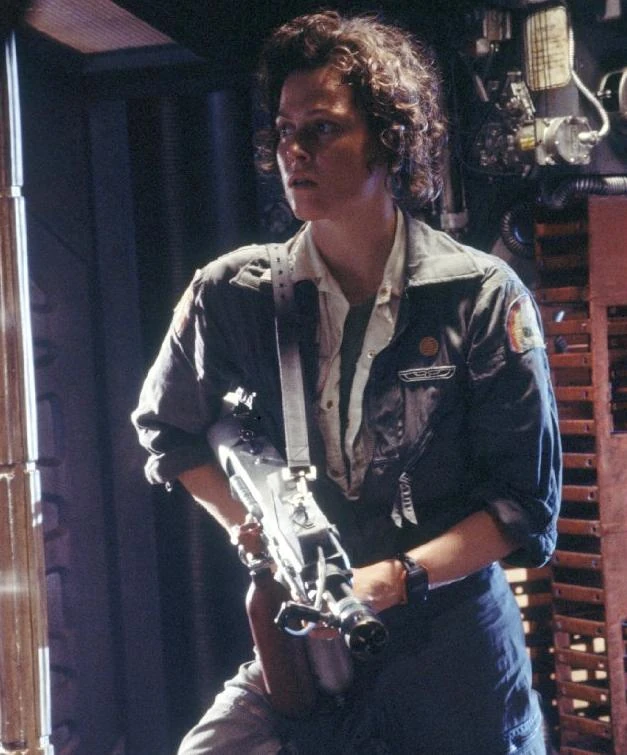
On the other end of the spectrum, the archetypal victim of Horror films is a single, white, virginal female. However, these roles have now evolved from victim to aggressor. Such as Sarah Connor from 'Terminator'; Alice in 'Resident Evil'; Ellen Ripley in 'Alien'.
Ellen Ripley: 'Alien'
Sarah Connor: 'Terminator'
Cultural Bias
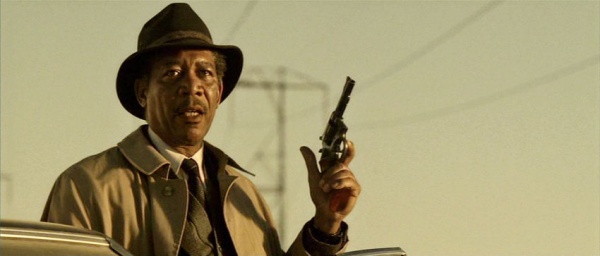
Hollywood has always been 'white centric' - i.e. leading actors and directors have always been white males with minority actors only playing minor roles. However, actors like Morgan Freeman and Will Smith have broken the mould, for example Morgan Freeman's prominent detective lead role in 'Se7en'.
Morgan Freeman in 'Se7en'
Heterosexual Bias
Having a homosexual protagonist is extremely rare in Hollywood. Moreover, in the Hannibal Lecter books, Thomas Harris writes nearly all the antagonists, such as serial killers, as having homosexual tendencies and sexual deviancies; this then translates into the films.
Gender Bias
Typically, females predominantly played the victim or the femme fatale. Although, since Clarice Starling in 'Silence Of The Lambs', the representations have been far more challenging.